From Artificial Intelligence to Marine Protection: Discussing the Future of Tourism in Slovenian Istria in Ankaran
The 4th Istrian Tourism Forum took place in Ankaran on 20 October 2026. Discussions focused on AI in tourism, the bid to host the Mediterranean Beach Games, the Love Istria booking system, marine conservation and new Slovenian tourism visitor profiles.
Working Together for Tourism Development in Slovenian Istria
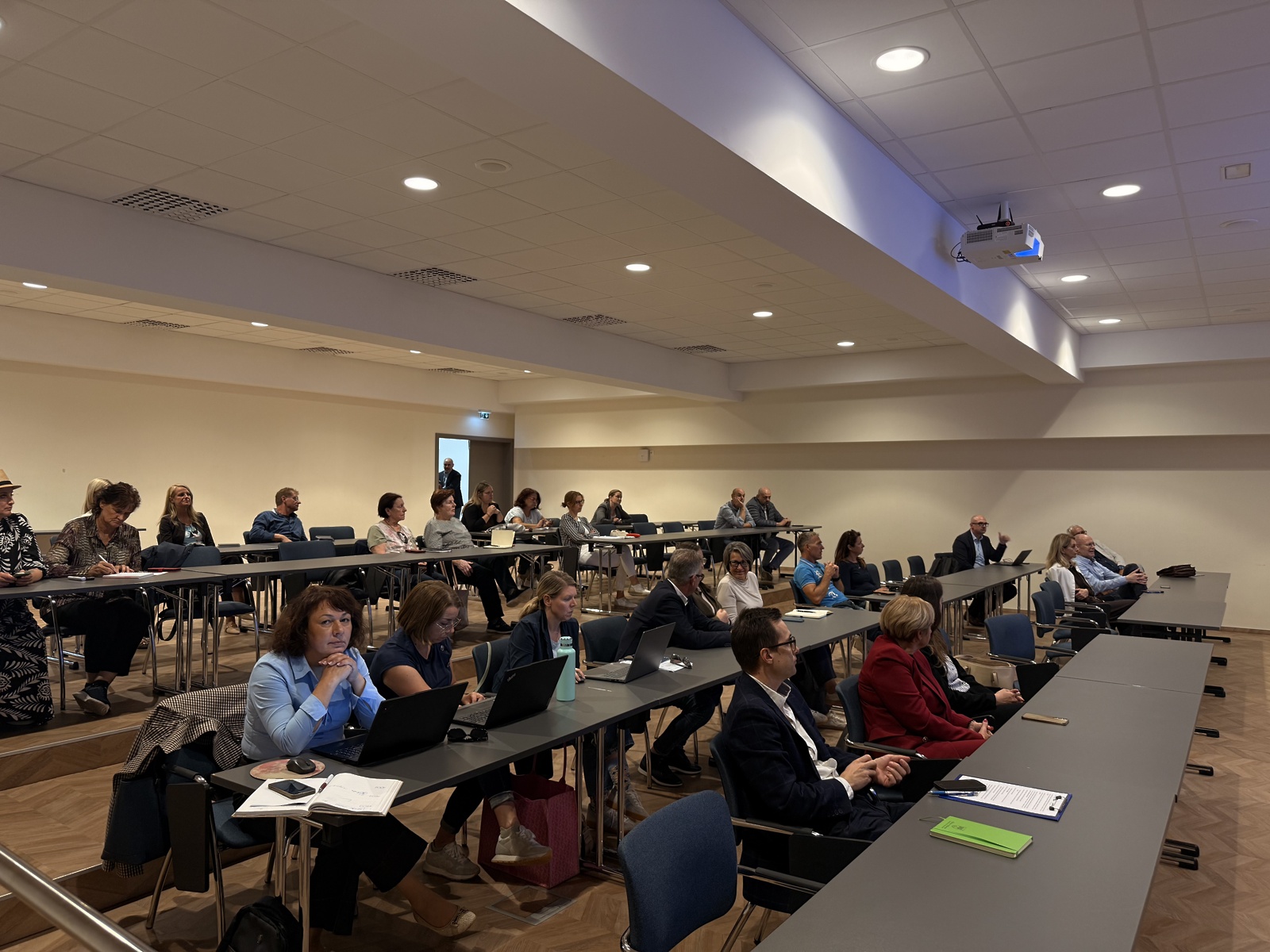
How can we keep pace with changes in tourism, make the most of new development opportunities and, at the same time, preserve the distinctive natural and cultural features of Slovenian Istria? These were the central questions of the 4th Istrian Tourism Forum, organised in Ankaran by the Public Institute for Nature and Society Ankaran.
The event opened with welcome addresses by the Institute's Director, Jani Krstić, and Dr Danijel Starman, representing the Mayor of the Municipality of Ankaran.
The Istrian Tourism Forum provides an opportunity for knowledge exchange, presentations of current projects, discussions on development opportunities and cooperation among stakeholders who help shape the region's tourism offering. The development of Ankaran, Koper, Izola, and Portorož and Piran is closely linked to the development of Slovenian Istria as a whole.
Finding a balance between economic opportunities, the quality of life of local residents and the conservation of the natural environment is becoming increasingly important. Bringing these aspects together was the central theme running through this year's forum.
Artificial Intelligence Is Changing How Guests Discover Destinations
The first part of the forum featured a practical workshop entitled “Artificial Intelligence in Tourism: How Guests Find Us and How We Can Make Our Work Easier”, led by Andraž Štalec from Red Orbit.
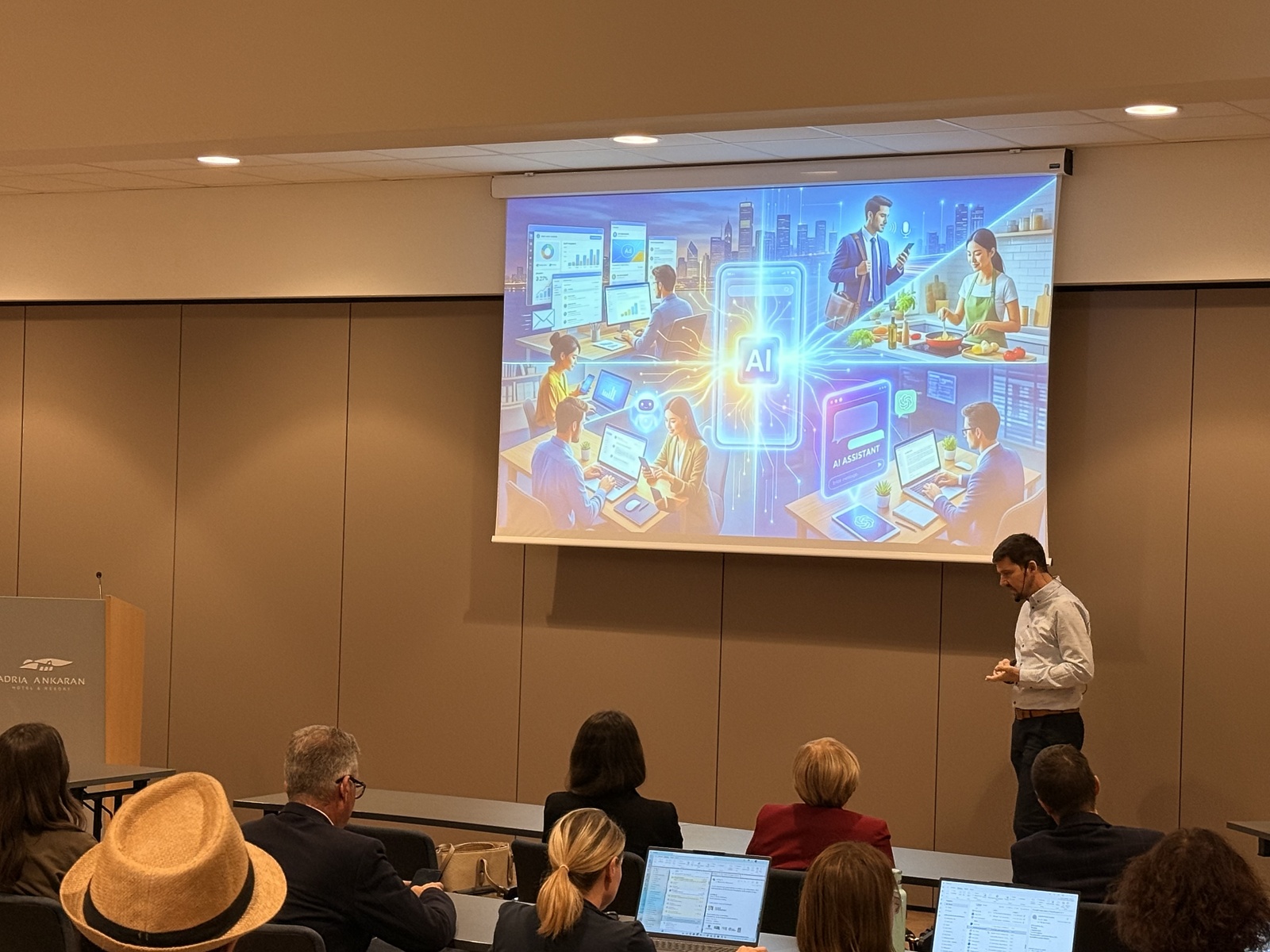 Artificial intelligence is changing not only the way promotional content is created but also how visitors discover destinations and plan their travels. Instead of browsing numerous websites, guests can now ask an AI tool where to go for an autumn weekend, which destination would be suitable for a family holiday or what they can do when the weather is bad.
For tourism service providers and destination organisations, this presents a new challenge: what matters is no longer just how highly their website ranks in search results, but also whether artificial intelligence recognises their offering and includes it in AI-generated responses.
An important part of the workshop therefore focused on the visibility of tourism offerings in AI tools, as well as their application in everyday work.
Practical examples included creating accommodation and experience descriptions, tailoring content to different target audiences, analysing guest reviews, drafting responses to reviews and preparing promotional copy in different languages.
What can tourism service providers take away from this? High-quality, clear and up-to-date information about their offerings is becoming even more important. Artificial intelligence can assist with content creation and processing, but AI-generated responses must be verified. Particular attention must also be paid to the protection of guests’ personal data.
Mediterranean Beach Games: An Opportunity for International Recognition
During the plenary session, Blaž Perko from the Olympic Committee of Slovenia presented the bid by the municipalities of Slovenian Istria to host the Mediterranean Beach Games in 2031.
The bid presents opportunities that extend beyond sport. International sporting events can contribute to greater destination recognition, stronger connections within the local community and the promotion of the region in foreign markets.
The possibility of a joint presence and multi-year promotional exposure within the Olympic Movement is also important for Slovenian Istria.
The presentation prompted questions and discussion among participants, demonstrating that the opportunities and challenges associated with hosting such an event are an important topic for the region.
Booking Love Istria: From Promotion to Direct Booking
Another important step in the joint marketing of Slovenian Istria is Booking Love Istria, a shared booking system connecting the destinations of Ankaran, Koper, Izola, and Portorož and Piran.
The project, presented by Nina Jurinčič from the Public Institute for Nature and Society Ankaran, connects regional promotion with the possibility of booking accommodation and tourism experiences directly.
The system aims to make the journey from interest in an offering to an actual booking easier for visitors. Instead of sending a booking enquiry and waiting for a reply, guests can select an available date or time slot, check the price and make a booking.
For tourism service providers, the system represents an additional sales channel linked to the shared Love Istria destination brand and the promotional activities of Slovenian Istria.
What should accommodation providers know?
Under the model presented, joining the system involves no joining fee or monthly subscription fee. A 10% commission applies only to completed sales, while providers retain control over their pricing, availability, cancellation policies and listing content.
The system can be integrated with several established availability management tools, including Phobs and Cubilis. Providers can also receive assistance with setting up their listings, preparing descriptions and translations.
Interested providers can obtain further information about joining the system by emailing halki@portoroz.si.
The POSEIDONE Project: A Well-Preserved Marine Environment Is the Foundation of High-Quality Tourism
Tourism development is closely connected to preserving the environment that attracts visitors to Slovenian Istria in the first place.
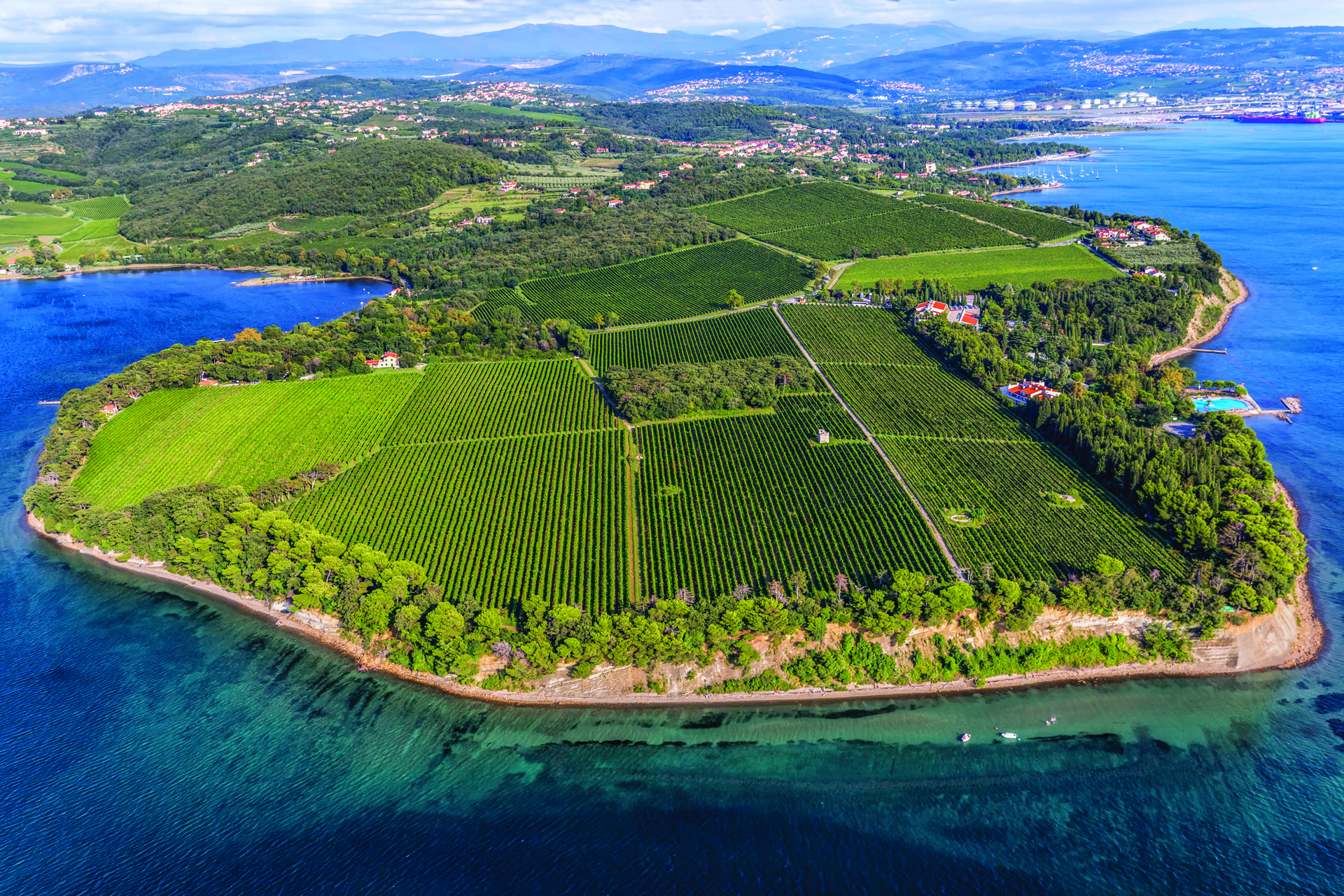
Nina Lončarević from the Public Institute for Nature and Society Ankaran presented the results of the POSEIDONE project, implemented under the Interreg Italy–Slovenia Programme. The project focuses on biodiversity conservation and reducing pressures on protected marine and coastal areas in the northern Adriatic.
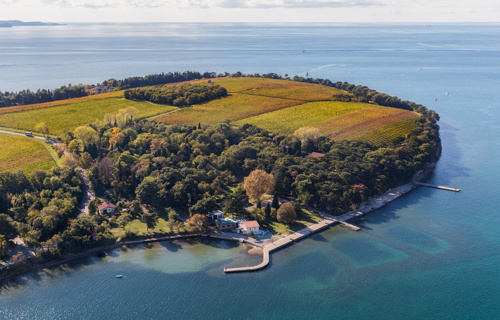
Particular attention was paid to Debeli Rtič Landscape Park, which covers approximately 340 hectares, including 160 hectares of sea. Around 700 animal species have been recorded in its marine area, representing a significant proportion of the biodiversity of Slovenian waters.
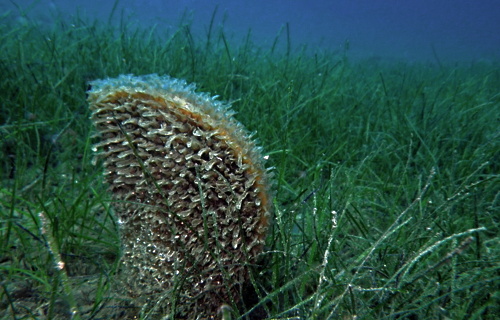
Studies presented as part of the project highlight the consequences of improper anchoring, which can damage seagrass meadows and other sensitive habitats. Other significant pressures include fishing activities, urbanisation and climate change.
The project has included measures to mark the boundaries of the protected area at sea and strengthen nature conservation supervision. Technical background studies have also been prepared to support the reduction of tourism's negative impacts.
What does this mean for visitors and tourism service providers?
Responsible visitation of natural areas is important not only for conserving plant and animal species but also for the quality of the tourism experience. When navigating and anchoring, visitors must respect restrictions applicable within protected areas, avoid anchoring in sensitive marine habitats and ensure that waste does not end up in the sea.
Tourism service providers also have an important role to play by raising visitors' awareness of the rules and the importance of nature conservation. In the long term, successful tourism depends on a well-preserved environment and a high-quality living environment for local residents.
Who Are the Guests We Want to Reach?
The final part of the forum focused on the updated segmentation of Slovenian tourism target audiences, presented by Ana Jemec Špik from the Slovenian Tourist Board.
In 2026, the Slovenian Tourist Board developed a new visitor segmentation model based on a study involving 8,374 survey respondents. The model takes into account visitors' travel motivations, habits, interests and potential to generate greater value for the destination.
The study highlights four target personas:
Engaged Travellers (9%) travel frequently and want to experience the diversity of a destination, from local cuisine and culture to nature and local experiences.
Authentic Explorers (24%) seek authentic engagement with the local community, outdoor activities and smaller tourism providers. Sustainability and the quality of the experience are important to them.
Urban Explorers (11%) enjoy discovering cultural heritage, gastronomy, distinctive local features and urban attractions.
Loyal Advocates (19%) primarily seek relaxation and leisure, enjoy returning to familiar destinations and recommend them to others.
The percentages represent the proportions of survey respondents assigned to the respective segments.
For tourism service providers, these findings offer a useful basis for tourism product development and the creation of targeted promotional messages.
For Ankaran and Slovenian Istria, opportunities to develop authentic experiences combining nature, local cuisine, cultural heritage and contact with local residents are particularly relevant. Tourism offerings outside the peak tourist season also have considerable potential.
The updated segmentation therefore enables more informed decisions about which visitors destinations wish to reach, what they can offer them and how to communicate with them more effectively.
Development Opportunities We Can Realise Through Cooperation
This year's Istrian Tourism Forum brought together five areas that may initially appear different but are closely connected: new technologies, sporting events, shared distribution channels, nature conservation and understanding visitors.
All of them raise the same question: how can Slovenian Istria develop a high-quality and competitive tourism offering that benefits tourism service providers, visitors and local residents?
Part of the answer lies in cooperation between destinations, businesses, public institutions and the local community, as well as in knowledge transfer and turning development ideas into concrete projects.
The future of tourism in Slovenian Istria depends not only on how many visitors we attract, but also on the experiences we offer them and how successfully we preserve the environment that brings them here.
The organiser, the Public Institute for Nature and Society Ankaran, would like to thank all speakers, participants and participating partners for their contributions to this year's forum and for sharing their knowledge, experiences and views on the future of tourism in the region.